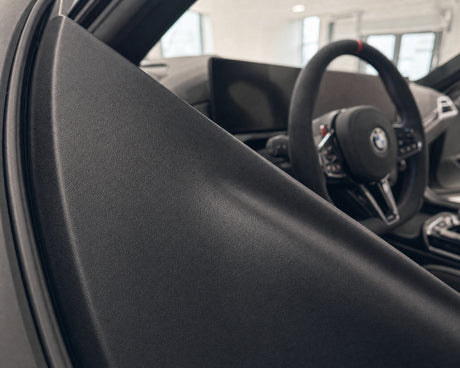
Cockpit-Pflege fürs Auto: antistatisch gegen wiederkehrenden Staub
Daniel von Detailing1 |


| Crowd | Discount |
|---|
SONAX PROFILINE Clay Bar - 100 g is on backorder. As soon as everything in your order is back in stock, we ship it all in one go — delivery time follows whichever item takes longest.
Item added to your cart.
View cartDo you have any questions or need help?
We are sure that our help page will help you. There you will find information on how to contact us and the relevant answers to frequently asked questions.
Didn't find what you were looking for? Write us a message in the chat.
Shipping within Germany from €4.90 with delivery times of 1 to 2 business days. Within Germany, we offer free shipping with DPD for orders over €70. For orders over €100, shipping with DHL is also free for you.
Need your order by the next day? Discover Express Shipping starting from €14.90.
We ship your order to 🇩🇪 Germany, 🇦🇹 Austria, 🇨🇭 Switzerland, 🇳🇱 Netherlands, 🇧🇪 Belgium, 🇱🇺 Luxembourg, 🇫🇷 France, 🇮🇹 Italy, 🇪🇸 Spain, 🇵🇹 Portugal, 🇩🇰 Denmark, 🇸🇪 Sweden, 🇭🇺 Hungary, 🇨🇿 Czech Republic, 🇸🇰 Slovakia and 🇸🇮 Slovenia.
Car Care Store in Nordhorn
Why wait when you can get it fast? Order your car care products from us online and choose between convenient pickup or our lightning-fast delivery, whether locally or throughout Europe. We are dedicated to offering you maximum flexibility and convenience so your car always stays in top condition.
You can always pick up your order from Tuesday to Friday, 10:00 to 17:00, at Bosinks Kamp 8 in 48531 Nordhorn at Detailing1. Please have your pickup confirmation ready. We look forward to your visit.
Couldn't load pickup availability
What sets the Clay Bar from the SONAX PROFILINE range apart? This high-grade pro clay made in Japan pulls stubborn contamination like fallout, tar, industrial fallout and brake dust off paint, glass and chrome without scratching the surface — mechanically, no chemistry, in a 100 g hand-sized piece.
Regular washing and chemical cleaners shift plenty of contamination — but not all of it. Fallout, baked-on industrial fallout, stubborn tar spots and adhesive residue lock mechanically into the paint surface and stay put despite shampoo and pre-wash. The SONAX PROFILINE Clay Bar pulls this contamination off through mechanical shearing: the clay glides over the surface you've wetted with lube and "catches" the dirt particles sticking up out of the paint, trapping them in the clay — a physical process that cleans deeper than any cleaner on its own.
Detailing1's tip from the shop: Always use plenty of lube — best of all the SONAX PROFILINE QuickDetailer sprayed straight onto the surface. Never use the clay on a dry surface; the drag it creates puts in scratches. Fold the clay over once after each pass to move the dirt you've picked up to the inside and bring a fresh clay face to the surface. When the clay goes too dark or the dirt particles won't fold away anymore, it's spent and should go in the bin — never re-knead it and carry on.
The SONAX PROFILINE Clay Bar works on a physical principle that's fundamentally different from chemical cleaning. Chemical cleaners shift contamination through a pH reaction or solvent action — alkaline cleaners emulsify grease, acidic cleaners dissolve limescale, and iron removers react with rust particles. Claying, on the other hand, mechanically "shears" contamination off the paint surface: the slightly tacky consistency of the clay bonds with dirt particles that sit above the paint level and tears them out of their anchoring as you pull the clay along.
This mechanism explains why claying is irreplaceable for certain contamination and can't be fully swapped out for any chemical method. Baked-in fallout — microscopic metal particles thrown off by braking and rail traffic that bake into the clear coat — is reachable for chemical iron removers, as long as the oxidation hasn't gone too deep yet. For everything else that won't shift chemically, the mechanical action of the clay is the better tool.
The quality of the clay decides how gentle this process is. Cheap clays hold hard particles spread unevenly or have a consistency that's too firm, so they act like sandpaper when you drag them over the paint. Japanese production stands for an even spread of plasticisers and tested particle sizes that make sure the clay grabs dirt without leaving its own marks or scratches.
One thing that often gets underrated day-to-day is how claying affects the polishing that comes after. On a surface that hasn't been decontaminated, the clear coat still holds embedded foreign bodies that act like tiny grinding particles during polishing — the polish can't carry the pad evenly across the surface, and the result falls short of what's possible. After claying you've got a smooth, particle-free surface where the polish's abrasives only work the clear coat — the polishing process becomes repeatable and the high-gloss result predictable.
After claying the paint surface is typically satin-smooth and slick — every bit of sealant residue has been pulled off by the lube and the claying. The "nail test" feel, where you run a finger wrapped in plastic film over the untreated surface and feel roughness, vanishes completely after claying. This roughness-free surface is the ideal base for the polishing or sealing that follows.
The basic requirement for safe claying is a thoroughly pre-washed surface. Loose dirt particles on the paint — sand, coarse grit — have to be off before you clay, since they get between clay and paint and can put in scratches. A base wash with the SONAX PROFILINE MultiClean "Alkaline" pre-cleaner takes off grease, silicone and surface dirt before the clay goes to work.
The lube is the most critical variable in the clay process. A quick detailer with enough lubricating action — like the SONAX PROFILINE QuickDetailer — lets the clay glide over the surface without snagging or putting in scratches. Spray the QuickDetailer on generously over an area of about 40 × 40 cm before you bring in the clay. You can re-spray during claying as needed; too little lube noticeably ups the friction and is the clear signal to stop right away and spray more.
The technique is linear, not circular: you guide the clay in straight passes with very light pressure — pretty much just the weight of the clay itself — over the surface. Circular motions concentrate the shearing forces and up the scratch risk; straight passes spread the removal evenly. Fold the clay over once after each pass to hide the dirt you've picked up and bring a fresh clay face to the surface.
After claying there's QuickDetailer residue left on the surface, which you take off with a clean SONAX PROFILINE MicrofaserTuch "Soft Touch". The surface is then ready to polish — the full removal of wax and sealant residue through the claying often makes a separate degrease unnecessary.
The Clay Bar can be used on every smooth, glossy vehicle surface: clear coat on bodywork and bumpers, toughened glass on the side and rear windows, chromed or polished metal trim and alloy wheels. On these surfaces it pulls off every kind of clinging industrial fallout, fallout, tar spots, adhesive residue and stubborn water spots that chemical cleaning couldn't fully shift.
A practical test for whether claying is needed is the "plastic film test" or "nail test": cover a freshly washed vehicle with a small piece of plastic film and run your finger over it — if you feel clear roughness, the surface is contaminated and claying is needed. After the work you repeat the test: a genuinely clean, decontaminated surface feels smooth as glass. This simple check also works to show the customer and makes the added value of the clay step immediately tangible.
Vehicles with especially heavy contamination loads — vehicles that regularly sit near industrial or rail areas, company cars on open car parks, or vehicles after nearby paint work — benefit from regular clay treatments. In a professional detailing protocol, claying sits after pre-cleaning and before polishing: wash first → iron remover → clay → polish → seal.
An important step after claying that often gets overlooked is drying the surface thoroughly before polishing. The lube (QuickDetailer) leaves a thin residual film after you wipe it off, which can affect how the polish works. With high-gloss polishes this is mostly no problem; with sealants and coatings that need an absolutely clean, dry surface, a final wipe-down with isopropyl alcohol (IPA) is worth it — it takes off all lube residue and sets the surface up ideally for the next step.
The limits of claying are with surfaces that have no clear-coat seal. Matte paint and matte wraps simply aren't suited to claying — the clay and lube would change the micro-textured matte surface and wreck the matte character. Extremely deep-set contamination, where the foreign body has gone in under the clear-coat surface, can't be pulled off with the clay either; that's where an abrasive polish or paint correction is needed.
In the modern detailing market there are various approaches to mechanical decontamination of the paint surface that complement the classic clay bar or replace it in certain areas. Each method has its pros and cons, and understanding these differences helps you pick the right tool.
Clay pads for polishing machines — pads made of polyethylene or similar synthetics — allow machine decontamination with higher area output. They're more efficient on big surfaces like the bonnet and roof, but less precise in tight spots like mirror housings, door edges and grille angles. The hand clay is the better choice in these areas and indispensable for precise, controlled claying.
Clay cloths (cleaning cloths with a clay-coated surface) are another modern alternative that's easier to handle than a loose clay bar — you wipe the cloth straight over the surface without having to shape and fold it like a clay bar. The downside: if a clay cloth hits the floor it's contaminated — unlike a clay bar — and has to be binned. The hand clay, by contrast, can be wiped, kneaded and carried on with for surface-level dirt, as long as no coarse dirt particles have worked their way in.
Chemical alternatives like fallout removers and iron removers are very effective for certain contamination types — above all oxidised iron particles — and take less manual work. Combining chemical decontamination (iron remover first) and claying afterwards is the gold standard in professional detailing: the iron remover loosens the oxidised iron particles first, and they're then pulled up far more easily by the clay. That way both tools are reduced to their respective strength, and the end result is a fully decontaminated surface.
The SONAX PROFILINE Clay Bar pays off in any detailing operation that offers full paint details. Without decontamination through claying, the detailing protocol is missing a key step — polishes on contaminated surfaces run straight over the baked-in foreign bodies and can't fully control the result. The 100 g unit is enough for one to two full vehicle details; for high-throughput operations it's worth keeping several units in stock.
In the SONAX PROFILINE system workflow, the Clay Bar fills the step between the alkaline base clean with the MultiClean "Alkaline" and the polish itself. After claying the surface is roughness-free and low on sealant residue — in this state SONAX PROFILINE polishes work at maximum efficiency, because no foreign body is left to disturb the cutting action or act as scratch potential. Sealing off afterwards with the BrilliantShine Detailer reliably protects the freshly detailed surface against quick re-soiling — and lays down a hydrophobic protective layer that pushes the next claying far into the future, because contamination clings far less to sealed surfaces than to unsealed clear coat — a cycle of cleaning and protecting that noticeably cuts the effort of every follow-up detail.
Storing the Clay Bar after use is simple but important: wipe the clay down with a clean microfibre cloth, knead it through well (to spread the dirt particles evenly), then store it dry in the box it came in. Damp storage promotes germ growth and can damage the clay structure over time. With the right care and storage the 100 g unit is usable across several details, which brings the cost per treatment down to an economical level.
For operations that offer their customers full documentation of the detailing steps, the clay treatment is a convincing piece of added value to put across: customers you explain it to — that after washing their vehicle still had mechanically bound contamination in the surface that only claying could remove — grasp the difference between a simple car wash and a professional detail straight away, intuitively. Anyone who communicates the clay step visibly — say with a quick before-and-after test using the plastic film method — builds lasting trust and clearly sets their offering apart from cheaper competitors. The hands-on proof of "smooth as glass" after claying is more convincing than any brochure. That makes the Clay Bar not just a cleaning tool but a quality marker in the customer conversation too.
High-quality and durable clay for removing stubborn dirt from paint, glass and chrome.
Wash the vehicle thoroughly. Unpack the clay and knead it slightly to flatten it. Spray glass cleaner onto the paint as a lubricant. Guide the clay over all tactile contaminants in careful back-and-forth movements, re-spraying glass cleaner if necessary. Check with the palm of your hand whether all imperfections have been removed, and repeat the application if necessary. Wipe with a clean microfiber cloth. After use, wipe the clay with the cloth, knead it well and store it dry in its box. Not for matte paint or
Clay is suitable for the following surfaces: chrome, glass/windows, paint.
Clay is available at Detailing1 in 100 g containers.
The main advantages of Clay: Highly effective yet scratch-free, dimensionally stable and non-sticky, germ-free dry storage.
Contact
SONAX GmbH
Münchener Str. 75, 86633 Neuburg an der Donau, Deutschland
+498431530
info@sonax.de
sonax.de
Choose from many payment methods such as PayPal, Klarna, Apple Pay, Mastercard or Visa and benefit from purchase on account and installment payments. Your payment information is always processed securely. Questions about payment?
Your order will reach you in just 1-2 days with DHL, DPD or UPS for orders over €4.90. Shipping is free for orders over €70. Need it faster? Choose from our express shipping offer. We attach great importance to sustainability, which is why our shipping with DHL and DPD is climate-neutral. Questions about shipping?
SONAX
Acid-free wheel cleaner with color change for all rim types

SONAX
XTREME Ceramic Spray Sealant Spray Sealant
Ceramic Spray Sealant — 4 Months Protection, Si-Carbon

SONAX
Ceramic Quick Detailer — Ceramic Detailer with Si-Carbon Protection


SONAX
PROFILINE MultiStar "All-Purpose-Cleaner" Universal Cleaner
MultiStar - Universal Cleaner Concentrate


SONAX
PROFILINE ActiFoam "Energy" Cleaning Foam (Snow Foam)
pH-neutral snow foam cleaner for contactless pre-wash


SONAX
PROFILINE OS "02-06" High Gloss Polish with Sealant (One-Step)
OS 02-06 — High-Gloss Polish with Sealant (One-Step)

SONAX
XTREME Tire Shine Gel "Ultra Wet Look" Tire Care
ReifenGlanzGel "Ultra Wet Look" — Reifenpflege mit tiefem Hochglanz


SONAX
PROFILINE EX "04-06" High-Gloss Polish (Finish)
Silikonöl-, & Staubfreie Hochglanzpolitur für Exzenterpolierer


SONAX
XTREME Ceramic Tire+Rim Detailer Quick Detailer
2-in-1 Ceramic Care: Cleans, protects, and conditions tires and rims


SONAX
XTREME Film Cleaner Special cleaner for film wraps
Film Cleaner — Special Cleaner for PPF, Vinyl, and Matte Paint


SONAX
PROFILINE LeatherCleaner Leather Cleaner (Foam Cleaner)
LeatherCleaner — Professional Leather Cleaner (Foam Cleaner)


SONAX
XTREME Rich-Foam Shampoo Car Shampoo
Rich-Foam Shampoo — High-foaming car shampoo for foam guns
Daniel von Detailing1 |

Daniel von Detailing1 |

Daniel von Detailing1 |

Daniel von Detailing1 |

Daniel von Detailing1 |

Daniel von Detailing1 |

Daniel von Detailing1 |

Daniel von Detailing1 |

Daniel von Detailing1 |

Daniel von Detailing1 |

Daniel von Detailing1 |

Daniel von Detailing1 |