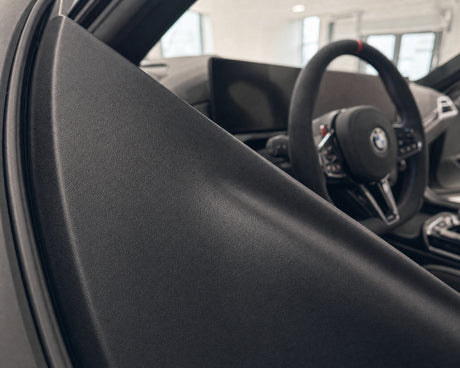
Cockpit-Pflege fürs Auto: antistatisch gegen wiederkehrenden Staub
Daniel von Detailing1 |


| Crowd | Discount |
|---|
SONAX PROFILINE ClayDisc "150" clay pad - 1 piece / Ø 150 mm is on backorder. As soon as everything in your order is back in stock, we ship it all in one go — delivery time follows whichever item takes longest.
Item added to your cart.
View cartDo you have any questions or need help?
We are sure that our help page will help you. There you will find information on how to contact us and the relevant answers to frequently asked questions.
Didn't find what you were looking for? Write us a message in the chat.
Shipping within Germany from €4.90 with delivery times of 1 to 2 business days. Within Germany, we offer free shipping with DPD for orders over €70. For orders over €100, shipping with DHL is also free for you.
Need your order by the next day? Discover Express Shipping starting from €14.90.
We ship your order to 🇩🇪 Germany, 🇦🇹 Austria, 🇨🇭 Switzerland, 🇳🇱 Netherlands, 🇧🇪 Belgium, 🇱🇺 Luxembourg, 🇫🇷 France, 🇮🇹 Italy, 🇪🇸 Spain, 🇵🇹 Portugal, 🇩🇰 Denmark, 🇸🇪 Sweden, 🇭🇺 Hungary, 🇨🇿 Czech Republic, 🇸🇰 Slovakia and 🇸🇮 Slovenia.
Car Care Store in Nordhorn
Why wait when you can get it fast? Order your car care products from us online and choose between convenient pickup or our lightning-fast delivery, whether locally or throughout Europe. We are dedicated to offering you maximum flexibility and convenience so your car always stays in top condition.
You can always pick up your order from Tuesday to Friday, 10:00 to 17:00, at Bosinks Kamp 8 in 48531 Nordhorn at Detailing1. Please have your pickup confirmation ready. We look forward to your visit.
Couldn't load pickup availability
What is a ClayDisc and how does it differ from a clay bar? This machine-driven clay pad from the PROFILINE line is built for random-orbital and DA polishers — it swaps hand-kneading for machine-speed decon, working the same area in a fraction of the time with more even cut.
Every proper detail starts with decontamination: fallout, baked-on brake dust, industrial fallout and tree-sap contamination sit deep in the clearcoat and have to come off before you polish or seal. A classic clay bar does the job, but it eats time — on a mid-size car you're looking at 30–60 minutes by hand. The SONAX PROFILINE ClayDisc "150" cuts that down hard: as a 150 mm dia. clay pad for dual-action random-orbital machines, the machine does the claying for you. Time per car drops to 10–15 minutes — and the whole panel gets treated more evenly than you'd manage by hand.
Detailing1's tip from the shop: Always run plenty of lube with the ClayDisc — either a dedicated clay lubricant or, in a pinch, diluted car shampoo (2 ml to 500 ml water). Too little lube and the pad grabs and tears across the paint and can leave marring. Keep the machine at a low to medium speed (setting 2–3 on the DA) — more speed doesn't mean more decon, it just raises the risk of heat building up in the clay. After the ClayDisc pass, do a control wash or rinse with clean water before you prep the clearcoat for polish or sealant with SONAX PROFILINE Prepare degreaser.
The SONAX PROFILINE ClayDisc "150" uses a thermoplastic polymer clay laid as a thin working layer on a firm carrier disc. That carrier disc handles the mechanical link to the machine (hook-and-loop) and spreads pressure evenly across the whole clay face. The clay itself sits in the mid-range of the clay-aggression scale — punchy enough to lift baked-on iron particles, fallout, sap and caked industrial dust, but gentle enough that the claying doesn't carve deep scratches into the clearcoat.
The aggression of a clay is a key parameter: too soft and it won't grab contamination effectively; too aggressive and it leaves marring in the clearcoat that you then have to polish out. The ClayDisc "150" sits in the medium to slightly aggressive band — plenty for most contamination on normal cars, without forcing a heavy correction pass afterwards just to clear marring. On very soft paint or fresh respray, do a test on a hidden spot, because any mechanical decon — even with lube — leaves minimal contact marks that can show up on very soft paint.
The DA's oscillating motion drives the clay across the surface from different angles and directions. That three-dimensional attack lifts contamination that sometimes holds firm under a one-directional hand stroke: the machine gets around the "flow shadow" that a directional claying motion can leave around firmly stuck particles. For very stubborn single spots — deep sap dots, say, or baked-in brake-dust deposits — a hand clay still wins on precision in those small areas, because you can build pressure more deliberately.
One core advantage of the machine over hand claying is consistent pressure: by hand, the pressure swings with fatigue and the angle of your wrist; with the machine, it stays constant across the whole working face. That gives you a more even decon result — treated the same everywhere, never overdone anywhere. On cars with big flat areas like bonnets and roofs the edge is measurable: the feel after the ClayDisc pass (that famous glass-smooth paint) is more even than after hand claying.
The ClayDisc's clay is formulated to resist solvents: in contact with clay lubricants that carry small amounts of cleaning agents, the clay keeps its structure and elasticity. That matters, because some detailers use quick detailers or dedicated lubes as lube, and these carry surfactants and polymers — which would soften a non-solvent-resistant clay and change its surface texture.
The right ClayDisc routine in the prep process: car fully washed and dried; then snap the ClayDisc onto the DA; spray the paint with plenty of lube (the panel should glisten wet, not drip); at setting 2–3, run even passes across the panel, keeping light pressure; overlap each pass 50% with the last; rinse the panel with clean water afterwards and dry it off.
Lube is the single most critical variable with the ClayDisc. Too little and the clay drags hard on the paint — you'll feel it as grabbing or juddering in the machine. The second you feel that resistance, drop the speed and add more lube. Too much lube and the clay "floats" and loses mechanical contact — decon performance drops off. You've got the right amount when the machine glides smoothly across the panel without skating. Good rule of thumb: about 5–8 sprays of clay lubricant on a 50×50 cm panel.
For stubborn local contamination (sap spots, say, or heavily brake-dusted areas behind the wheel arches) you can work the ClayDisc over that area with more pressure and several overlapping passes. Just don't tilt the machine — the ClayDisc has to sit flat on the surface so the whole clay face works evenly. A tilted disc only works on its edge, which both cuts effectiveness and raises the risk of edge marks. Take the machine up to setting 3, put direct pressure on the contaminated spot and make 3–4 passes — the clay works its way into the contamination and lifts it off layer by layer. After that more intense bit, always spray fresh lube and finish the whole panel back at normal setting 2.
After the ClayDisc pass, rinse the disc under running water and knead and squeeze it hard to work the picked-up contamination deeper into the clay. Visibly dark or heavily discoloured spots on the clay face show where most of the contamination landed — those spots get kneaded in deeper next time round to expose fresh surface.
In a pro detailing shop the ClayDisc "150" is an efficiency tool that re-frames the whole decon step. Without it: 45–60 minutes of hand claying per car, hard going and tiring on the wrist. With the ClayDisc: 10–15 minutes of machine decon, a more even result, less physical strain on the detailer. At 5 cars a day the ClayDisc saves 2.5–3.5 hours of working time daily — time that's far better spent on other steps in the detail.
Quality control after the ClayDisc pass is the touch test: run a freshly washed finger (in a protective glove) across the cleaned paint. A smooth, near-frictionless glide tells you the contamination is gone — the "glass" feel. Roughness and resistance as you glide mean there's contamination left, calling for either a second ClayDisc pass or a manual touch-up with the traditional SONAX PROFILINE Clay bar. The latter is often the more precise call for very small, stubborn spots — the ClayDisc for the open panels, the hand clay for the detail work.
A common question in the shop: do you always have to polish after the ClayDisc? Technically no — claying on its own often leaves no visible marks, depending on clearcoat hardness and the lube you ran. Under strip lighting you'll see minimal contact patterns on very soft paint; on medium-hard to hard OEM clearcoat the paint is already very smooth and even after claying with no further work. If you're only sealing (no polish), a mild pass with a soft finishing pad and a light finishing polish is worth it to clear any clay marks and optimise the surface for the sealant to bond. Anyone polishing the car afterwards can often skip that intermediate step, since the polish removes the clay marks anyway.
The ClayDisc "150" is built primarily for the prep step before polishing. After a successful decon pass the paint is free of contamination, but the claying has left the finest surface marks — comparable to very fine scratches from a mild abrasive. Those marks come fully out in the following polishing step (even with a medium-hard foam pad and a mild polish), so the finished result after the full detail shows no clay marks at all. Seal straight after the ClayDisc without polishing and you risk locking those marks in under the sealant.
The classic SONAX PROFILINE Clay bar is the proven tool for hand decon — it lets you do precise detail work on edges, mirrors and small areas, but it eats time on big panels. The ClayDisc "150" is its counterpart for machine work on open areas: large-area, fast, even. In pro detailing the two tools sensibly work together: ClayDisc for the bonnet, roof, wings and doors; hand clay for bumper edges, the undersides of spoilers and spots the big disc can't reach well.
The alternative to mechanical decon is chemical iron removers and clay substitutes (clay towels, clay mitts). Chemical iron removers like the SONAX PROFILINE fallout remover dissolve metallic iron particles chemically — they're especially good on brake-dust iron particles, but they can't remove every type of contamination (sap, industrial fallout). Clay towels and clay mitts work much like the ClayDisc but are softer and better suited to delicate paint. The ClayDisc "150" pairs the abilities of a clay with the speed of the machine, which makes it the most efficient all-round tool for full-panel mechanical decon in a pro setup.
For pro detailing shops decontaminating several cars a day, the ClayDisc "150" is a soundly economical investment: a well-cared-for ClayDisc lasts 30–50 cars or more, depending on how heavy the contamination is. By comparison, a hand clay typically drops off noticeably in cleaning power after 8–12 cars. The higher up-front price of the ClayDisc against a hand clay pays for itself quickly through the longer service life and the saved working time.
Telltale signs of a spent ClayDisc: the clay face is dark all over (fully saturated with contamination), has no elasticity left, or shows cracks and lifting spots. A spent ClayDisc won't decontaminate effectively anymore, even rinsed with water — the clay has no capacity left to take on new contamination. In that state, replace it, since working on with a saturated disc gets you no cleaning power at all.
Between cars, always store the ClayDisc damp — drying out turns the clay hard and brittle. If a dried-out clay face is wetted again, it takes several minutes for the elasticity to come back — and during that window working with the disc isn't advisable, since hard clay marks the paint rather than lifting contamination. Taking a break? Drop the ClayDisc straight into water. Easy method: lay the ClayDisc in a shallow plastic tray with a bit of water and keep it covered between uses. After the working day, store the ClayDisc cool in a damp, covered container. As a verified SONAX dealer, Detailing1 keeps the PROFILINE ClayDisc "150" in the range permanently. To get the most life out of the disc, it's worth running a chemical iron remover before the machine claying: it dissolves the iron-rich contamination chemically first, so the ClayDisc has less mechanical work to do and its clay face stays fresh longer.
The clay for machine processing.
Wash the vehicle thoroughly before use. Attach the disc to the hook-and-loop backing pad (ideally use with an eccentric polisher). Before first use, thoroughly moisten the disc with ScheibenKlar as a lubricant and briefly polish it on a spot on a car window to activate the disc. Now work on the painted surface without pressure, never letting the disc run dry. Then wipe the surface with a soft microfiber cloth soft touch (04510000) before
ClayDisc 150 is suitable for the following surfaces: glass/window, paint.
ClayDisc 150 is available at Detailing1 in the container size of 1 piece.
The main advantages of ClayDisc 150: machine-independent, usable on eccentric and rotary polishers, manual application also possible, long durability, faster application than with a clay bar.
Contact
SONAX GmbH
Münchener Str. 75, 86633 Neuburg an der Donau, Deutschland
+498431530
info@sonax.de
sonax.de
Choose from many payment methods such as PayPal, Klarna, Apple Pay, Mastercard or Visa and benefit from purchase on account and installment payments. Your payment information is always processed securely. Questions about payment?
Your order will reach you in just 1-2 days with DHL, DPD or UPS for orders over €4.90. Shipping is free for orders over €70. Need it faster? Choose from our express shipping offer. We attach great importance to sustainability, which is why our shipping with DHL and DPD is climate-neutral. Questions about shipping?
SONAX
Acid-free wheel cleaner with color change for all rim types

SONAX
XTREME Ceramic Spray Sealant Spray Sealant
Ceramic Spray Sealant — 4 Months Protection, Si-Carbon

SONAX
Ceramic Quick Detailer — Ceramic Detailer with Si-Carbon Protection


SONAX
PROFILINE MultiStar "All-Purpose-Cleaner" Universal Cleaner
MultiStar - Universal Cleaner Concentrate


SONAX
PROFILINE ActiFoam "Energy" Cleaning Foam (Snow Foam)
pH-neutral snow foam cleaner for contactless pre-wash


SONAX
PROFILINE OS "02-06" High Gloss Polish with Sealant (One-Step)
OS 02-06 — High-Gloss Polish with Sealant (One-Step)

SONAX
XTREME Tire Shine Gel "Ultra Wet Look" Tire Care
ReifenGlanzGel "Ultra Wet Look" — Reifenpflege mit tiefem Hochglanz


SONAX
PROFILINE EX "04-06" High Gloss Polish (Finish)
Silikonöl-, & Staubfreie Hochglanzpolitur für Exzenterpolierer


SONAX
XTREME Ceramic Tire+Rim Detailer Quick Detailer
2-in-1 Ceramic Care: Cleans, protects, and conditions tires and rims


SONAX
XTREME Film Cleaner Special cleaner for film wraps
Film Cleaner — Special Cleaner for PPF, Vinyl, and Matte Paint


SONAX
PROFILINE LeatherCleaner Leather Cleaner (Foam Cleaner)
LeatherCleaner — Professional Leather Cleaner (Foam Cleaner)


SONAX
XTREME Rich-Foam Shampoo Car Shampoo
Rich-Foam Shampoo — High-foaming car shampoo for foam guns
Daniel von Detailing1 |

Daniel von Detailing1 |

Daniel von Detailing1 |

Daniel von Detailing1 |

Daniel von Detailing1 |

Daniel von Detailing1 |

Daniel von Detailing1 |

Daniel von Detailing1 |

Daniel von Detailing1 |

Daniel von Detailing1 |

Daniel von Detailing1 |

Daniel von Detailing1 |