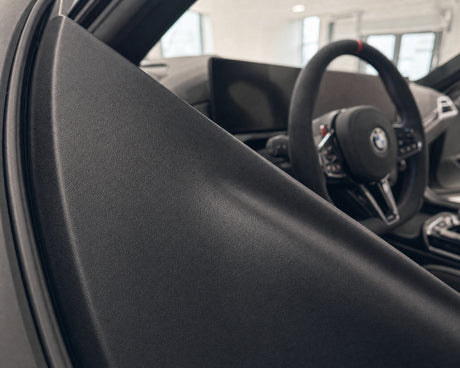
Cockpit-Pflege fürs Auto: antistatisch gegen wiederkehrenden Staub
Daniel von Detailing1 |


| Crowd | Discount |
|---|
SONAX PROFILINE FilzPad 125 polishing pad - 2 pieces is on backorder. As soon as everything in your order is back in stock, we ship it all in one go — delivery time follows whichever item takes longest.
Item added to your cart.
View cartDo you have any questions or need help?
We are sure that our help page will help you. There you will find information on how to contact us and the relevant answers to frequently asked questions.
Didn't find what you were looking for? Write us a message in the chat.
Shipping within Germany from €4.90 with delivery times of 1 to 2 business days. Within Germany, we offer free shipping with DPD for orders over €70. For orders over €100, shipping with DHL is also free for you.
Need your order by the next day? Discover Express Shipping starting from €14.90.
We ship your order to 🇩🇪 Germany, 🇦🇹 Austria, 🇨🇭 Switzerland, 🇳🇱 Netherlands, 🇧🇪 Belgium, 🇱🇺 Luxembourg, 🇫🇷 France, 🇮🇹 Italy, 🇪🇸 Spain, 🇵🇹 Portugal, 🇩🇰 Denmark, 🇸🇪 Sweden, 🇭🇺 Hungary, 🇨🇿 Czech Republic, 🇸🇰 Slovakia and 🇸🇮 Slovenia.
Car Care Store in Nordhorn
Why wait when you can get it fast? Order your car care products from us online and choose between convenient pickup or our lightning-fast delivery, whether locally or throughout Europe. We are dedicated to offering you maximum flexibility and convenience so your car always stays in top condition.
You can always pick up your order from Tuesday to Friday, 10:00 to 17:00, at Bosinks Kamp 8 in 48531 Nordhorn at Detailing1. Please have your pickup confirmation ready. We look forward to your visit.
Couldn't load pickup availability
What makes the SONAX PROFILINE FilzPad 125 special? This aggressive felt disc is built for machine work with glass polishes and sanding pastes — it runs on glass, paint and metal polishes, where foam pads would be far too soft.
Not every polishing job comes off with a foam pad. Glass polishes, sanding pastes for deep paint damage and clouded plastic windows all need a material with much more cut of its own and a different fibre structure than foam. The SONAX PROFILINE FilzPad 125 is made exactly for that: a dense, aggressive felt disc, 125 mm across, that runs on both dual-action and rotary machines and really shows its strength where soft foam simply won't generate enough cut.
Detailing1's tip from the shop: When you do glass correction with the FilzPad 125, always bring the glass up to temperature before you polish — cold glass reacts much more sluggishly to the polish. Don't lay the glass polish onto hot glass that's been baking in the sun, because it'll flash off far too fast. Aim for a glass temperature between 15 and 25 °C, for example by prepping in the shade. For windscreens, the rule is: always polish with the rear-window heater switched off and the side windows wound all the way down, so you don't cook the seals.
The basic difference between a FilzPad 125 and a foam pad is in the material structure. Foam is open- or closed-cell — it holds a lot of air and gives way under pressure. That makes foam pads ideal for controlled pressure spread on paint, because the pad follows contours and dampens the energy. Felt, on the other hand, is made of tightly woven or matted fibres with no real air pockets. It compresses only minimally under pressure and transfers the machine's energy straight onto the working area.
That direct transfer is the decisive advantage on glass polishes: the abrasives in glass polish need a defined contact pressure to do their work. A foam pad that gives way under load drops that effective pressure and so cuts the polish's bite. The FilzPad 125 holds the pressure constant, which lets even the fine abrasive grains in the polish reach their full effect — even at low speeds.
Another technical plus: the felt's fibre texture spreads the abrasive differently to foam. Foam pulls polish into its pores and gives it back up under pressure and heat — which leads to uneven spread when the pressure shifts. Felt fibres have no pores: the polish stays on the surface of the fibres and gets spread evenly across the working zone. On glass that means fewer smears, more even polishing marks and a more predictable result.
Cleaning the FilzPad after use also works differently to foam. Felt mats up under heavy pressure or rubbing, which permanently changes the fibre structure and hurts performance. The right way: rinse the felt under running warm water and work the polish residue out by gently squeezing and flushing — never knead or wring it hard. After rinsing, let the pad dry flat on a clean cloth. If glass polish has dried in, a short soak in warm water before you flush the residue out does the trick. Well looked-after FilzPads keep their fibre structure over several jobs and deliver consistent results.
The 125 mm size matches standard backing plates for dual-action and rotary machines. The pad's hook-and-loop backing keeps it locked onto the backing plate and lets you swap pads fast, no tools. That matters especially on glass work, where you often switch between polishing stages — from a coarser sanding paste to a finer glass polish and finally to the clear-coat sealing step.
For glass correction the FilzPad 125 is the first step on clouded windscreens, side windows with water-spot etching or rear windows with baked-in mineral deposits. Prep is more critical here than on paint: glass surfaces have to be cleaned thoroughly and clear of loose grit before you polish, because any foreign body between pad and glass causes instant scratches. A pre-treatment with SONAX PROFILINE GlassCleaner strips residue and preps the surface perfectly.
Run a lower speed on glass than you would on paint. Too high a speed builds heat, which lets the glass polish flash off too fast and cuts the working effect of the abrasive grains. For dual-action machines, speed 3–4 is a good starting point; for rotary machines, a moderate speed between 800 and 1200 rpm. Important: on glass, always work with plenty of polish — a dry FilzPad creates scratches that are far harder to remove on glass than on paint.
On paint the FilzPad 125 is reserved for heavy correction: deep oxidation layers, sanding marks after coarse wet sanding and extreme weathering. Always run it as the first stage in a multi-step correction, followed by a SchaumPad medium for the intermediate stage and a SchaumPad weich for the hologram-free finish. Trying to clear the FilzPad's marks with just one follow-up stage risks an incomplete result on dark paint.
On metal polishes — say for alloy wheels, chrome trim or stainless add-on parts — the FilzPad 125 works too. The high cut lets you strip oxidation layers off metal, corrosion spots and dulled areas efficiently. For this job, SONAX PROFILINE MetalPolish is the one to reach for, built specifically for metal polishing that needs heavy cut.
The FilzPad 125 is the right tool when conventional cleaning methods hit their limit. Clouded windscreens with washer-fluid deposits, mineral-salt spots and UV greying are the classic case: an ordinary glass cleaner won't shift these deposits, because they've chemically worked their way into the glass surface. The FilzPad's mechanical abrasion with a suitable glass polish breaks these bonds physically — without damaging the screen, as long as the process is done right.
Windscreens with heavy wiper marks are another common job. After long use, wiper blades leave spiral scoring in the glass that shows up annoyingly in backlight. With the FilzPad 125 and a fine-grain glass polish you can clearly reduce or fully remove these surface flaws in many cases. The result: better vision on night drives and in low-angle sun.
The FilzPad's limits are on coated glass surfaces. Hydrophobic coatings on windscreens — the kind various makers apply — get damaged or fully stripped by the FilzPad's abrasion. If you want to keep a coating like that, leave the FilzPad alone and pick alternative cleaning methods. The same goes for tinted windows with film: the film sits on the inside of the glass and must not be machine-worked.
For vehicles with plastic windows — older convertibles with polycarbonate rear screens, say, or certain van windscreens — the FilzPad 125 works too, but it needs particularly careful pressure control. Plastic glazing is softer than mineral glass and reacts more sensitively to overheating from mechanical pressure. Here you run lower speeds and ease off the pressure more often than on real glass.
When you work side windows, take extra care at the edges. The sealing lip on the door frame can be damaged by the spinning FilzPad — either through direct contact or through polish that creeps into the seal and softens the material. Pros mask the seal areas before glass work with painter's tape and polish only up to the masking. That prevents damage and keeps the working area defined.
Picking the right pad always comes down to the substrate and the correction goal. The FilzPad 125 is the call when you need high cut and the surface won't be damaged by heat or pressure — so on glass and metal, or on paint only for extreme corrections. For standard paint work the foam-pad system from the SONAX PROFILINE range is the better base: the SchaumPad hart for heavy-cut work, the SchaumPad medium for medium corrections, the SchaumPad weich for the hologram-free finish.
The LammwollPad offers similar cut to the FilzPad on paint, but behaves fundamentally differently: lambswool fibres have a natural spring that pulls heat away better and spreads the cut more evenly across larger panels. For heavy-cut on paint the LammwollPad is therefore often the better call than the FilzPad. The FilzPad, on the other hand, beats the LammwollPad on glass, because its structural stiffness optimises pressure spread on the hard glass surface.
For glass work there's no direct alternative to the FilzPad in the SONAX PROFILINE range — it's the specialist pad for the job. If you do glass correction regularly, always keep a stock of FilzPads, since the abrasive process wears them down faster than foam pads on paint work. The twin pack is a practical starting point for the first buy.
The FilzPad 125 pays off for any shop that offers glass correction as a service. Clouded windscreens, side windows with water-spot etching and baked-in mineral deposits are common customer requests that can't be sorted cleanly without the right polishing tool. With the FilzPad 125 and a quality glass polish you can offer this service professionally and reliably — and get results that clearly stand apart from plain glass cleaning.
For detailers expanding their range with paint sealing after intensive paint correction, the FilzPad 125 is the first step on vehicles with heavily weathered paint. Combined with the cutting polishes from the SONAX PROFILINE range — the CutMax "6/4" for extreme corrections, say — the FilzPad allows an aggressive first cut before the further correction stages on foam work out the final result.
For workshops that recondition vehicles after hail damage or accident repair, the FilzPad 125 is a relevant tool too: glass and paint work after mechanical damage often needs a mix of heavy cutting and follow-up fine correction. The twin pack of two FilzPads keeps the work flowing here, with no breaks for pad swaps.
One more note on shop efficiency: if you run the FilzPad 125 regularly, keep an eye on wear. Felt wears faster from the heavy abrasion of glass work than foam does on paint polishing — the fibres flatten and the pressure transfer goes uneven. A simple test: lay the pad on a flat surface and run a finger over it. If the felt surface has gone uneven or noticeably thinner, it's time for a new pad. Renewing regularly isn't a cost question but a quality one — a worn FilzPad gives worse results and longer working times.
To round out a complete glass-correction kit, pair the FilzPad with the GlassCleaner for the pre-clean and a glass sealant for final protection. The full package of cleaning, polishing with the FilzPad and sealing afterwards is the professional answer to everything around glass correction — and it pays off both for reconditioning shops with high glass throughput and for detailers who selectively treat vehicles with badly loaded screens. The SONAX PROFILINE system makes sure all products work together: do the pre-clean with PROFILINE products, work the glass polish with the FilzPad and pick the sealant from the PROFILINE range, and you get a consistent result with no compatibility issues between the individual steps.
High-quality, highly abrasive felt pad for processing glass polish and abrasive pastes.
Place the polishing pad centrally on the backing plate. Do not overheat the polished area. To protect the felt, never polish with high pressure or extreme tilting. At the end of work, blow out with compressed air to clean. If the felt gets wet, for example when polishing glass, be careful when removing it from the backing plate and allow it to dry thoroughly before blowing it out with compressed air.
FilzPad 125 is suitable for the following surfaces: GRP, paint, glass/window, paint (severely weathered/scratched).
FilzPad 125 is available at Detailing1 in a pack size of 2 pieces.
The main advantages of FilzPad 125: extreme abrasive performance, lint and scratch-free, for smoothing orange peel in paints.
Contact
SONAX GmbH
Münchener Str. 75, 86633 Neuburg an der Donau, Deutschland
+498431530
info@sonax.de
sonax.de
Choose from many payment methods such as PayPal, Klarna, Apple Pay, Mastercard or Visa and benefit from purchase on account and installment payments. Your payment information is always processed securely. Questions about payment?
Your order will reach you in just 1-2 days with DHL, DPD or UPS for orders over €4.90. Shipping is free for orders over €70. Need it faster? Choose from our express shipping offer. We attach great importance to sustainability, which is why our shipping with DHL and DPD is climate-neutral. Questions about shipping?
SONAX
Acid-free wheel cleaner with color change for all rim types

SONAX
XTREME Ceramic Spray Sealant Spray Sealant
Ceramic Spray Sealant — 4 Months Protection, Si-Carbon

SONAX
Ceramic Quick Detailer — Ceramic Detailer with Si-Carbon Protection


SONAX
PROFILINE MultiStar "All-Purpose-Cleaner" Universal Cleaner
MultiStar - Universal Cleaner Concentrate


SONAX
PROFILINE ActiFoam "Energy" Cleaning Foam (Snow Foam)
pH-neutral snow foam cleaner for contactless pre-wash


SONAX
PROFILINE OS "02-06" High Gloss Polish with Sealant (One-Step)
OS 02-06 — High-Gloss Polish with Sealant (One-Step)

SONAX
XTREME Tire Shine Gel "Ultra Wet Look" Tire Care
ReifenGlanzGel "Ultra Wet Look" — Reifenpflege mit tiefem Hochglanz


SONAX
PROFILINE EX "04-06" High-Gloss Polish (Finish)
Silikonöl-, & Staubfreie Hochglanzpolitur für Exzenterpolierer


SONAX
XTREME Ceramic Tire+Rim Detailer Quick Detailer
2-in-1 Ceramic Care: Cleans, protects, and conditions tires and rims


SONAX
XTREME Film Cleaner Special cleaner for film wraps
Film Cleaner — Special Cleaner for PPF, Vinyl, and Matte Paint


SONAX
PROFILINE LeatherCleaner Leather Cleaner (Foam Cleaner)
LeatherCleaner — Professional Leather Cleaner (Foam Cleaner)


SONAX
XTREME Rich-Foam Shampoo Car Shampoo
Rich-Foam Shampoo — High-foaming car shampoo for foam guns
Daniel von Detailing1 |

Daniel von Detailing1 |

Daniel von Detailing1 |

Daniel von Detailing1 |

Daniel von Detailing1 |

Daniel von Detailing1 |

Daniel von Detailing1 |

Daniel von Detailing1 |

Daniel von Detailing1 |

Daniel von Detailing1 |

Daniel von Detailing1 |

Daniel von Detailing1 |