


-
Koch-Chemie
Finish Spray Exterior "Fse" Quick Detailer with Kalk-EX
Saurer Quick Detailer mit Kalk-EX-Formel für Lack, Glas und Kunststoff
In stock (7× 1000 ml / 1 liter)Backordered (1× 10 liters)From $16.61Inhalt: 1000mlUnit price ($16.61 / l)Unavailable -
Koch-Chemie
Heavy Cut "H9.02" Heavy Compound
Silikonölfreie grobe Schleifpolitur für tiefe Kratzer bis P1200
Low stock (3× 1000 ml / 1 liter · 3× 250ml)From $26.30Inhalt: 250mlUnit price ($105.20 / l)Unavailable -


 2024 Version
Koch-Chemie
Heavy Cut Foam Pad "Rot" Abrasive Cutting Foam / Polishing Pad (2024)
Extremely abrasive polishing pad for deep scratches and weathering
In stock (8× Ø 150mm / 6" · 4× Ø 126mm / 5" · 5× 76mm / 3" diameter · 7× Ø 45mm / 1.7")From $15.22Inhalt: 1 StückUnit price ($15.22 / Stück)Unavailable -
Koch-Chemie
Quick & Shine "Qs" Quick Detailer
All-rounder for quick shine and color enhancement
Low stock (5× 1000 ml / 1 liter)Pre-order (10 liters)From $16.61Inhalt: 1000mlUnit price ($16.61 / l)Unavailable -
Koch-Chemie
One Cut & Finish "P6.02" High-Gloss Polish with Sealant
Effective high-gloss polish and sealant for scratch removal
In stock (2× 1000 ml / 1 liter · 7× 250ml)From $26.30Inhalt: 250mlUnit price ($105.20 / l)Unavailable -


 2024 Version
Koch-Chemie
Micro Cut Soft Foam Pad "Violett" (Soft) Anti-Hologram Foam / Polishing Pad (2024)
Soft polishing pad for delicate paints and a streak-free finish
In stock (10× Ø 150mm / 6" · 3× Ø 126mm / 5" · 6× Ø 76mm / 3" · 9× Ø 45mm / 1.7")From $15.22Inhalt: 1 StückUnit price ($15.22 / Stück)Unavailable -
Koch-Chemie
Fine Cut "F6.01" Cutting Polish (Fine)
Fine abrasive polish for brilliant deep gloss and perfect paintwork
In stock (4× 1000 ml / 1 liter · 6× 250ml)From $24.93Inhalt: 250mlUnit price ($99.72 / l)Unavailable -


 Version 2024
Koch-Chemie
Fine Cut Foam Pad "Gelb" Medium-Hard Cutting Pad / Polishing Pad (2024)
Medium-hard sanding sponge for medium to deep scratches
In stock (5× Ø 150mm / 6" · 1× Ø 126mm / 5" · 5× Ø 76mm / 3" · 10× Ø 45mm / 1.7")From $12.46Inhalt: 1 StückUnit price ($12.46 / Stück)Unavailable -
Koch-Chemie
Micro Cut "M3.02" Micro-Abrasive Polish
For the removal of holograms & scratches on all paint types
Low stock (6× 250ml)Backordered (5× 1000 ml / 1 liter)From $22.16Inhalt: 250mlUnit price ($88.64 / l)Unavailable -


 2024 Version
Koch-Chemie
One Cut Foam Pad "Orange" Medium-Cut 2-in-1 Polishing Pad (2024)
Polishing pad for scratch removal and finishing in one step
In stock (3× Ø 150mm / 6" · 5× Ø 126mm / 5" · 6× Ø 76mm / 3" · 7× Ø 45mm / 1.7")From $15.22Inhalt: 1 StückUnit price ($15.22 / Stück)Unavailable -
Koch-Chemie
Micro Cut & Finish "P3.01" Micro Cutting Polish with Carnauba Wax
High-gloss micro-abrasive polish with integrated carnauba wax
In stock (3× 1000 ml / 1 liter · 6× 250ml)From $24.93Inhalt: 250mlUnit price ($99.72 / l)Unavailable -
Koch-Chemie
Wash & Finish "Wf" Waterless-Wash Detailer
Must-have for a waterless wash with brilliant results
In stock (12× 1000ml)Pre-order (10 liters · 20 liters)From $18.00Inhalt: 1000mlUnit price ($18.00 / l)Unavailable -
Koch-Chemie
Lack-Polish green "P1.03" Finishing Polish
Finish-Politur mit Schleifgrad 1,0 & Glanzgrad 9,5 für alle Lackarten
In stock (7× 1000 ml / 1 liter)Pre-order (5 liters)From $23.54Inhalt: 1000mlUnit price ($23.54 / l)Unavailable -
Koch-Chemie
Micro Cut "M2.02" High-Gloss Anti-Hologram Polish
Innovative polish for the permanent removal of holograms
In stock (4× 1000 ml / 1 liter · 5× 250ml)From $22.16Inhalt: 250mlUnit price ($88.64 / l)Unavailable -
Koch-Chemie
Spray Sealant "S0.02" Spray Sealant
Spray sealant for glossy paintwork and perfect protection
In stock (3× 500ml)Pre-order (5 liters)From $42.23$45.71Inhalt: 500mlUnit price ($84.46 / l)Unavailable -


 2024 Version
Koch-Chemie
Polish & Sealing Foam Pad "Green" Soft Finishing Sponge / Polishing Pad (2024)
Extra soft finishing pad for a flawless finish
In stock (3× Ø 150mm / 6" · 2× Ø 126mm / 5" · 10× Ø 45mm / 1.7")From $12.46Inhalt: 1 StückUnit price ($12.46 / Stück)Unavailable -
 XTREME
SONAX
XTREME Ceramic Spray Sealant Spray-On Sealant
Ceramic Spray Sealant — 4 Months Protection, Si-Carbon
In stock (14 units)$22.02$30.46Inhalt: 750mlUnit price ($29.36 / l)Unavailable -
 XTREME
SONAX
XTREME Ceramic QuickDetailer Quick-Detailer
Ceramic Quick Detailer — Ceramic Detailer with Si-Carbon Protection
Low stock (5 units)$16.47$23.54Inhalt: 750mlUnit price ($21.96 / l)Unavailable -
Koch-Chemie
Quick Finish "Qf" All-Round Finish Spray / Quick Detailer
All-round finish spray for radiant surfaces and shine
In stock (1 unit)From $16.61Inhalt: 1000mlUnit price ($16.61 / l)Unavailable -


 2024 Version
Koch-Chemie
Micro Cut Hard Foam Pad "Violett" (Hard) Anti-Hologram Pad / Polishing Pad (2024)
Hologram-free finish on high-solid paints with a hard polishing pad
In stock (6× Ø 150mm / 6" · 2× Ø 126mm / 5" · 11× Ø 76mm / 3" · 13× Ø 45mm / 1.7")From $15.22Inhalt: 1 StückUnit price ($15.22 / Stück)Unavailable -


 PROFILINE
SONAX
PROFILINE ActiFoam "Energy" Cleaning Foam (Snow Foam)
pH-neutral snow foam cleaner for contactless pre-wash
From $19.24$27.53Inhalt: 1000mlUnit price ($19.24 / l)Unavailable -


Koch-Chemie
Metal Polish "Mep" Metal Polish
Effective Metal Polish for Shine and Protection
In stock (2 units)$12.46Inhalt: 75mlUnit price ($166.13 / l)Unavailable -


 PROFILINE
SONAX
PROFILINE OS "02-06" High-Gloss Polish with Sealant (One-Step)
OS 02-06 — High-Gloss Polish with Sealant (One-Step)
In stock (6× 250ml · 3× 1000 ml / 1 liter)From $12.32$17.46Inhalt: 250mlUnit price ($49.28 / l)Unavailable -

Koch-Chemie
Lack-Polish violett "P2.03" Abrasive Gloss Polish
Abrasive high-gloss polish, correction and high gloss in one step
Low stock (6 units)$29.08Inhalt: 1000mlUnit price ($29.08 / l)Unavailable


Lacquer sealing
View all-
Koch-Chemie
Finish Spray Exterior "Fse" Quick Detailer with Kalk-EX
Saurer Quick Detailer mit Kalk-EX-Formel für Lack, Glas und Kunststoff
In stock (7× 1000 ml / 1 liter)Backordered (1× 10 liters)From $16.61Inhalt: 1000mlUnit price ($16.61 / l)Unavailable -
Koch-Chemie
Quick & Shine "Qs" Quick Detailer
All-rounder for quick shine and color enhancement
Low stock (5× 1000 ml / 1 liter)Pre-order (10 liters)From $16.61Inhalt: 1000mlUnit price ($16.61 / l)Unavailable -
Koch-Chemie
Wash & Finish "Wf" Waterless-Wash Detailer
Must-have for a waterless wash with brilliant results
In stock (12× 1000ml)Pre-order (10 liters · 20 liters)From $18.00Inhalt: 1000mlUnit price ($18.00 / l)Unavailable -
XTREME
SONAX
XTREME Ceramic Spray Sealant Spray-On Sealant
Ceramic Spray Sealant — 4 Months Protection, Si-Carbon
In stock (14 units)$22.02$30.46Inhalt: 750mlUnit price ($29.36 / l)Unavailable -
XTREME
SONAX
XTREME Ceramic QuickDetailer Quick-Detailer
Ceramic Quick Detailer — Ceramic Detailer with Si-Carbon Protection
Low stock (5 units)$16.47$23.54Inhalt: 750mlUnit price ($21.96 / l)Unavailable -
Koch-Chemie
Quick Finish "Qf" All-Round Finish Spray / Quick Detailer
All-round finish spray for radiant surfaces and shine
In stock (1 unit)From $16.61Inhalt: 1000mlUnit price ($16.61 / l)Unavailable -

 XTREME
SONAX
XTREME Ceramic Tyre+Wheel Detailer Quick-Detailer
2-in-1 Ceramic Care: Cleans, protects, and conditions tires and rims
In stock (8 units)$17.86$24.93Inhalt: 750mlUnit price ($23.81 / l)Unavailable -
 XTREME
SONAX
XTREME Plastic Detailer "Interior+Exterior" Plastic Care
Plastic Detailer — 4-in-1 Care for Interior & Exterior Plastics
Low stock (5 units)$17.86$24.93Inhalt: 500mlUnit price ($35.72 / l)Unavailable -

 XTREME
SONAX
XTREME Film Detailer Quick Detailer for Vinyl Wraps
Film Detailer — solvent-free, for PPF, vinyl, and matte films
In stock (10 units)$12.32$18.00Inhalt: 500mlUnit price ($24.64 / l)Unavailable -


GYEON
GYEON Q²M WetCoat – SiO₂ wet sealant directly after washing
In stock (5× 1000 ml / 1 liter · 6× 500ml · 1× 4 liters)From $23.55Inhalt: 500mlUnit price ($47.10 / l)Unavailable -


 A1
A1Dr. Wack "A1"
Premium spray wax for long-lasting paint protection & brilliant shine
Pre-order (500ml)From $26.30Inhalt: 750mlUnit price ($35.07 / l)Unavailable -

 ULTIMATE
Meguiars
Ultimate Quik Wax Spray Wax Sealant
Spray wax — real wax protection in 5 minutes after every wash
Low stock (6 units)$24.87Inhalt: 473mlUnit price ($52.58 / l)Unavailable -
 XTREME
SONAX
XTREME "BrilliantShine" Detailer Quick-Detailer
"BrilliantShine" Detailer — Polymer Quick Detailer, 6–8 weeks
In stock (3 units)$17.86$25.62Inhalt: 750mlUnit price ($23.81 / l)Unavailable -


CarPro
"Ech2O" Waterless-Wash Quick-Detailer
Waterless High Gloss and Protection
From $17.87Inhalt: 500mlUnit price ($35.74 / l)Unavailable -
 ULTIMATE
Meguiars
Ultimate Quik Detailer Quick-Detailer
Quick Detailer Spray — Shine & Protection Without Water Connection
$26.19Inhalt: 709mlUnit price ($36.94 / l)Unavailable -

 XTREME
SONAX
XTREME TrockenWäsche "Waterless-Wash" Detailer
Dry Wash Waterless-Wash — Vehicle Cleaning Without Water Connection
$19.24$26.30Inhalt: 750mlUnit price ($25.65 / l)Unavailable -

 AUTOMOTIVE
Koch-Chemie × THE FINISHER
THE FINISHER "JustPerfect" Quick Detailer
Detailer for high gloss & color enhancement on painted surfaces
In stock (7 units)$17.86$19.38Inhalt: 500mlUnit price ($35.72 / l)Unavailable -
Soft99
Fusso Coat Speed & Barrier Quick Detailer
Fast vehicle care with long-term protection made for Fusso Coat
In stock (7 units)$20.77$27.69Inhalt: 500mlUnit price ($41.54 / l)Unavailable -


 Personal care product
INNOVACAR
Clean & maximum shine in one step with minimum effort
Low stock (6× 100ml)From $8.60$17.19Inhalt: 100mlUnit price ($86.00 / l)Unavailable -
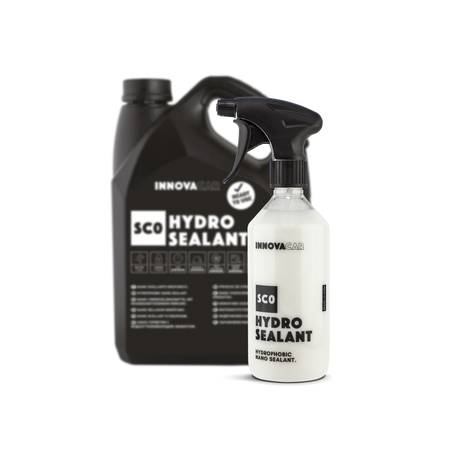


 sealing
INNOVACAR
"SC0" Hydro Sealant Spray Sealant
Spray Sealant for Protection & Shine in one Step
In stock (3× 4.54 liters · 6× 100ml)From $10.43$20.85Inhalt: 100mlUnit price ($104.30 / l)Unavailable -
 ULTIMATE
Meguiars
Ultimate Waterless Wash & Wax Detailer
Waterless 2-in-1 Cleaning and Wax Care for Paintwork
Low stock (4 units)$24.16Inhalt: 768mlUnit price ($31.46 / l)Unavailable -


CarPro
"EliXir" High-Gloss Quick-Detailer
Perfect shine and protection for your car in seconds
From $22.03Inhalt: 500mlUnit price ($44.06 / l)Unavailable -
Koch-Chemie
WetGloss "Wg" Wet Coat Sealant for Extra Gloss and Strong Hydrophobicity
RTU Wet Sealant with Aminosilane for Gloss and Beading in Minutes
In stock (14× 500ml)Pre-order (5 liters)From $22.84$24.93Inhalt: 500mlUnit price ($45.68 / l)Unavailable -
 ULTIMATE
Meguiars
Ultimate Paste Wax Wax Sealant
Synthetic Paste Wax — classic shine & 12 months protection
$49.86Inhalt: 236mlUnit price ($211.27 / l)Unavailable


polishing
View all-
Koch-Chemie
Heavy Cut "H9.02" Heavy Compound
Silikonölfreie grobe Schleifpolitur für tiefe Kratzer bis P1200
Low stock (3× 1000 ml / 1 liter · 3× 250ml)From $26.30Inhalt: 250mlUnit price ($105.20 / l)Unavailable -
2024 Version
Koch-Chemie
Heavy Cut Foam Pad "Rot" Abrasive Cutting Foam / Polishing Pad (2024)
Extremely abrasive polishing pad for deep scratches and weathering
In stock (8× Ø 150mm / 6" · 4× Ø 126mm / 5" · 5× 76mm / 3" diameter · 7× Ø 45mm / 1.7")From $15.22Inhalt: 1 StückUnit price ($15.22 / Stück)Unavailable -
Koch-Chemie
One Cut & Finish "P6.02" High-Gloss Polish with Sealant
Effective high-gloss polish and sealant for scratch removal
In stock (2× 1000 ml / 1 liter · 7× 250ml)From $26.30Inhalt: 250mlUnit price ($105.20 / l)Unavailable -
2024 Version
Koch-Chemie
Micro Cut Soft Foam Pad "Violett" (Soft) Anti-Hologram Foam / Polishing Pad (2024)
Soft polishing pad for delicate paints and a streak-free finish
In stock (10× Ø 150mm / 6" · 3× Ø 126mm / 5" · 6× Ø 76mm / 3" · 9× Ø 45mm / 1.7")From $15.22Inhalt: 1 StückUnit price ($15.22 / Stück)Unavailable -
Koch-Chemie
Fine Cut "F6.01" Cutting Polish (Fine)
Fine abrasive polish for brilliant deep gloss and perfect paintwork
In stock (4× 1000 ml / 1 liter · 6× 250ml)From $24.93Inhalt: 250mlUnit price ($99.72 / l)Unavailable -
Version 2024
Koch-Chemie
Fine Cut Foam Pad "Gelb" Medium-Hard Cutting Pad / Polishing Pad (2024)
Medium-hard sanding sponge for medium to deep scratches
In stock (5× Ø 150mm / 6" · 1× Ø 126mm / 5" · 5× Ø 76mm / 3" · 10× Ø 45mm / 1.7")From $12.46Inhalt: 1 StückUnit price ($12.46 / Stück)Unavailable -
Koch-Chemie
Micro Cut "M3.02" Micro-Abrasive Polish
For the removal of holograms & scratches on all paint types
Low stock (6× 250ml)Backordered (5× 1000 ml / 1 liter)From $22.16Inhalt: 250mlUnit price ($88.64 / l)Unavailable -
2024 Version
Koch-Chemie
One Cut Foam Pad "Orange" Medium-Cut 2-in-1 Polishing Pad (2024)
Polishing pad for scratch removal and finishing in one step
In stock (3× Ø 150mm / 6" · 5× Ø 126mm / 5" · 6× Ø 76mm / 3" · 7× Ø 45mm / 1.7")From $15.22Inhalt: 1 StückUnit price ($15.22 / Stück)Unavailable -
Koch-Chemie
Micro Cut & Finish "P3.01" Micro Cutting Polish with Carnauba Wax
High-gloss micro-abrasive polish with integrated carnauba wax
In stock (3× 1000 ml / 1 liter · 6× 250ml)From $24.93Inhalt: 250mlUnit price ($99.72 / l)Unavailable -
Koch-Chemie
Lack-Polish green "P1.03" Finishing Polish
Finish-Politur mit Schleifgrad 1,0 & Glanzgrad 9,5 für alle Lackarten
In stock (7× 1000 ml / 1 liter)Pre-order (5 liters)From $23.54Inhalt: 1000mlUnit price ($23.54 / l)Unavailable -
Koch-Chemie
Micro Cut "M2.02" High-Gloss Anti-Hologram Polish
Innovative polish for the permanent removal of holograms
In stock (4× 1000 ml / 1 liter · 5× 250ml)From $22.16Inhalt: 250mlUnit price ($88.64 / l)Unavailable -
2024 Version
Koch-Chemie
Polish & Sealing Foam Pad "Green" Soft Finishing Sponge / Polishing Pad (2024)
Extra soft finishing pad for a flawless finish
In stock (3× Ø 150mm / 6" · 2× Ø 126mm / 5" · 10× Ø 45mm / 1.7")From $12.46Inhalt: 1 StückUnit price ($12.46 / Stück)Unavailable -
2024 Version
Koch-Chemie
Micro Cut Hard Foam Pad "Violett" (Hard) Anti-Hologram Pad / Polishing Pad (2024)
Hologram-free finish on high-solid paints with a hard polishing pad
In stock (6× Ø 150mm / 6" · 2× Ø 126mm / 5" · 11× Ø 76mm / 3" · 13× Ø 45mm / 1.7")From $15.22Inhalt: 1 StückUnit price ($15.22 / Stück)Unavailable -
PROFILINE
SONAX
PROFILINE ActiFoam "Energy" Cleaning Foam (Snow Foam)
pH-neutral snow foam cleaner for contactless pre-wash
From $19.24$27.53Inhalt: 1000mlUnit price ($19.24 / l)Unavailable -
Koch-Chemie
Metal Polish "Mep" Metal Polish
Effective Metal Polish for Shine and Protection
In stock (2 units)$12.46Inhalt: 75mlUnit price ($166.13 / l)Unavailable -
PROFILINE
SONAX
PROFILINE OS "02-06" High-Gloss Polish with Sealant (One-Step)
OS 02-06 — High-Gloss Polish with Sealant (One-Step)
In stock (6× 250ml · 3× 1000 ml / 1 liter)From $12.32$17.46Inhalt: 250mlUnit price ($49.28 / l)Unavailable -
Koch-Chemie
Lack-Polish violett "P2.03" Abrasive Gloss Polish
Abrasive high-gloss polish, correction and high gloss in one step
Low stock (6 units)$29.08Inhalt: 1000mlUnit price ($29.08 / l)Unavailable -
Koch-Chemie
Heavy Cut "H8.02" Heavy Compound Polish
Extremely powerful polish with maximum cut
In stock (6× 1000 ml / 1 liter · 5× 250ml)From $23.54Inhalt: 250mlUnit price ($94.16 / l)Unavailable -


 PROFILINE
SONAX
PROFILINE EX "04-06" High-Gloss Polish (Finish)
Silikonöl-, & Staubfreie Hochglanzpolitur für Exzenterpolierer
In stock (1× 1000 ml / 1 liter)From $20.63$29.51Inhalt: 250mlUnit price ($82.52 / l)Unavailable -


 Private Customer Product Range
Koch-Chemie
"ShineSpeedPolish" Finishing Polish (High Gloss)
Gives your vehicle a flawless high gloss finish
From $22.48$22.84Inhalt: 500mlUnit price ($44.96 / l)Unavailable -


Koch-Chemie
Micro-Cut Pad "Violet" Polishing Pad Foam Cutting Pad
From $12.46Inhalt: 1 StückUnit price ($12.46 / Stück)Unavailable -

 Nautical Line
Koch-Chemie
Gelcoat One Cut "Gp6.01" High-Gloss Polish with Sealant for Gelcoats and Boat Paint (Marine Line)
Efficient one-step polish for gelcoats and boat paints with high gloss
In stock (3 units)From $89.89$99.73Inhalt: 1000mlUnit price ($89.89 / l)Unavailable -
Koch-Chemie
Headlight Polish 2 "Hlp2" high-gloss headlight polish with sealant
High-gloss headlight polish with integrated sealant
In stock (3 units)$25.62$27.69Inhalt: 250mlUnit price ($102.48 / l)Unavailable -
Koch-Chemie
Koch-Chemie Cutting Compound "H7.01" Sanding Polish (Coarse)
Heavy Cut Compound for weathered paint and deep scratches
Low stock (5 units)$42.23$45.71Inhalt: 1000mlUnit price ($42.23 / l)Unavailable


Paint preparation
View all-
Koch-Chemie
Clay Spray "Cls" Clay Lube for Decon Clay
Advanced lubricant spray for the application of cleaning clays
In stock (11× 500ml)Pre-order (10 liters)From $16.61Inhalt: 500mlUnit price ($33.22 / l)Unavailable -
Koch-Chemie
In stock (2 units)$53.33$58.17Inhalt: 2 StückUnit price ($26.67 / Stück)Unavailable -
Koch-Chemie
Koch-Chemie Reinigungsknete "Rkb" Mild "Blau" Clay Bar
Gentle cleaning for paint and glass with detailing clay
$51.94$55.40Inhalt: 200gUnit price ($259.70 / kg)Unavailable -
Koch-Chemie
Cleaning Clay "Rkr" Abrasive "Red" Clay Bar
Abrasive cleaning clay for heavily soiled paints
In stock (9 units)$51.94$55.40Inhalt: 200gUnit price ($259.70 / kg)Unavailable -

 Decontamination
INNOVACAR
"DL" Lube Clay Bar Lubricant Spray
Efficient Lubricant for Clay Bar and Polishing Pads
In stock (3 units)From $8.08$16.14Inhalt: 500mlUnit price ($16.16 / l)Unavailable -
The Rag Company
Effective paint cleaning and ideal preparation for wax and polish.
$40.16$40.87Inhalt: 2 StückUnit price ($20.08 / Stück)Unavailable -
D-CON
Clay-Lube Clay Bar Lubricant Spray
Perfect smoothness and protection for your paint
Low stock (6× 500ml)From $11.67$17.94Inhalt: 500mlUnit price ($23.34 / l)Unavailable -

Soft99
High-quality cleaning clay for optimal vehicle care
$18.00Inhalt: 100gUnit price ($180.00 / kg)Unavailable -
 GLATTE OBERFLÄCHE
Meguiars
SMOOTH SURFACE Clay Bar Replacement Detailing Clay
Replacement Detailing Clay for Sensitive Clear Coats
In stock (1 unit)$22.82Inhalt: 1 StückUnit price ($22.82 / Stück)Unavailable -
Koch-Chemie
In stock (8 units)$57.48$62.32Inhalt: 1 StückUnit price ($57.48 / Stück)Unavailable -

 PROFILINE
SONAX
Clay Knetmasse — Profi-Knete für kratzerfreie Lackdekontamination
$40.39Inhalt: 100gUnit price ($403.90 / 1000g)Unavailable -

Soft99
Professional cleaning clay for deep paint care
$18.00Inhalt: 100gUnit price ($180.00 / kg)Unavailable -
 HYBRID CERAMIC
Meguiars
HYBRID CERAMIC Synthetic Clay Kit Clay Bar
Synthetic Clay Pad + Ceramic Detailer + Microfiber Cloth — 1 Set
In stock (3 units)$48.48Inhalt: 1 StückUnit price ($48.48 / Stück)Unavailable -

 GLATTE OBERFLÄCHE
Meguiars
SMOOTH SURFACE Clay Kit Cleaning Clay
Complete Clay Bar and Lubricant Detailing Kit
$50.74Inhalt: 1 StückUnit price ($50.74 / Stück)Unavailable -
 PROFILINE
SONAX
PROFILINE ClayDisc "150" clay pad
Clay Disc "150" — Machine Clay Pad for DA Polishers
In stock (18 units)$38.64$55.55Inhalt: 1 StückUnit price ($38.64 / Stück)Unavailable -
 QUICK
QUICKMeguiars
QUIK Clay Detailing System Kit Clay Bar Set
Clay Bar Kit for silky-smooth, clean paint surfaces
$37.64Inhalt: 1 StückUnit price ($37.64 / Stück)Unavailable -

GYEON
Q²M ClayLube (REDEFINED) Clay Bar Lubricant
Clay Lubricant – Scratch-Free Decontamination
In stock (2 units)$20.78Inhalt: 500mlUnit price ($41.56 / l)Unavailable


Koch-Chemie
Micro Cut "M3.02" Micro-Abrasive Polish
For the removal of holograms & scratches on all paint types
Low stock (6× 250ml)Backordered (5× 1000 ml / 1 liter)From $22.16Inhalt: 250mlUnit price ($88.64 / l)Unavailable-
2024 Version
Koch-Chemie
One Cut Foam Pad "Orange" Medium-Cut 2-in-1 Polishing Pad (2024)
Polishing pad for scratch removal and finishing in one step
In stock (3× Ø 150mm / 6" · 5× Ø 126mm / 5" · 6× Ø 76mm / 3" · 7× Ø 45mm / 1.7")From $15.22Inhalt: 1 StückUnit price ($15.22 / Stück)Unavailable Koch-Chemie
Micro Cut & Finish "P3.01" Micro Cutting Polish with Carnauba Wax
High-gloss micro-abrasive polish with integrated carnauba wax
In stock (3× 1000 ml / 1 liter · 6× 250ml)From $24.93Inhalt: 250mlUnit price ($99.72 / l)UnavailableKoch-Chemie
Wash & Finish "Wf" Waterless-Wash Detailer
Must-have for a waterless wash with brilliant results
In stock (12× 1000ml)Pre-order (10 liters · 20 liters)From $18.00Inhalt: 1000mlUnit price ($18.00 / l)UnavailableKoch-Chemie
Lack-Polish green "P1.03" Finishing Polish
Finish-Politur mit Schleifgrad 1,0 & Glanzgrad 9,5 für alle Lackarten
In stock (7× 1000 ml / 1 liter)Pre-order (5 liters)From $23.54Inhalt: 1000mlUnit price ($23.54 / l)UnavailableKoch-Chemie
Micro Cut "M2.02" High-Gloss Anti-Hologram Polish
Innovative polish for the permanent removal of holograms
In stock (4× 1000 ml / 1 liter · 5× 250ml)From $22.16Inhalt: 250mlUnit price ($88.64 / l)UnavailableKoch-Chemie
Spray Sealant "S0.02" Spray Sealant
Spray sealant for glossy paintwork and perfect protection
In stock (3× 500ml)Pre-order (5 liters)From $42.23$45.71Inhalt: 500mlUnit price ($84.46 / l)Unavailable-
2024 Version
Koch-Chemie
Polish & Sealing Foam Pad "Green" Soft Finishing Sponge / Polishing Pad (2024)
Extra soft finishing pad for a flawless finish
In stock (3× Ø 150mm / 6" · 2× Ø 126mm / 5" · 10× Ø 45mm / 1.7")From $12.46Inhalt: 1 StückUnit price ($12.46 / Stück)Unavailable
A paint sealant only holds on prepped paint
How does paint refinement work? In three steps: prep pulls everything off the surface that doesn't belong there, polishing levels the clearcoat, and the sealant protects the result. Each step builds on the one before. At Detailing1 you'll find polish, pads and sealant for all three stages.
Paint sealant is the last of three steps on the paint and the only one that takes nothing off. Before it come prep, which pulls off dirt and embedded particles, and polishing, which levels the clearcoat. The sealant then lays down a sacrificial layer that catches dirt, UV light and acidic residue before they reach the paint. That order isn't up for debate.
- Three steps, three sub-categories. The route runs through paint prep for a clean starting surface, polishing for scratches and gloss, and paint sealant for the protection afterwards. Skip one of the three and you'll notice it at the next.
- Polishing removes material, so it's finite. The clearcoat on a production car measures around 40 to 50 microns; one pass with a cutting compound takes two to five of them. What that means for you: the paint only takes a limited number of polishes over its life, and every one you save is one you've gained.
- The type comes down to how long it lasts. A protective wax holds for weeks and can be topped up at every wash, spray sealants last months, ceramic sealants a year and beyond. The effort climbs in the same order, and so does the demand on your prep.
Day-to-day from Detailing1: We often get questions about sealants that stop beading after three weeks even though the maker says six months. The cause almost always sits between polishing and sealing. Every polish contains carrier oils that visually fill fine scratches and stay behind as a thin film once you wipe it off. The sealant then bonds to that oil instead of the paint and comes off with the second wash. After polishing, wipe every panel down with a degreaser or diluted isopropanol until the cloth squeaks dry. That one in-between step is what turns the quoted durability into a real one.
Why prep decides how long it lasts
A sealant bonds to whatever sits on top. If there's still a film of grime, wax residue or polish oil up there, it bonds to that and holds exactly as long as that layer in between holds.
So the first step is the wash, and one that doesn't put fresh scratches into the paint. A pre-cleaner and snow-foam pull off the heavy dirt before the wash mitt ever touches the surface. The full routine sits under car wash.
Then comes decontamination. Fallout rust, tar and tree sap still sit in the surface after the wash because they've anchored mechanically or baked in chemically. Whatever stays there ends up under the polishing pad later and drags marks across the paint. The products for that sit under paint prep.
You check with your hand, not your eyes. Slip a thin plastic bag over your fingers and run them over the dry paint. The film exaggerates every bit of roughness you can feel, and anything that still feels rough afterwards has to go before you polish.
The in-between step almost everyone skips is degreasing after polishing. Polish oils aren't a flaw in the product; they're part of how it works and they're what makes the wipe-off possible. They just have to come back off before any protection goes on.
On a car that already carries a layer, one step gets added. Old wax and polymer residue has to come off, or you're laying the new sealant onto a layer that's busy dissolving. An alkaline pre-cleaner or a shampoo with no gloss additives handles it in a single wash.
The difference shows up in how long it lasts. The same spray sealant holds its quoted months on a degreased panel and barely three washes on an oily one. It isn't the product that decides that — it's the fifteen minutes before it.
Polishing takes off, sealant lays on
The two jobs sound related and do the exact opposite. One takes material off, the other builds it up.
A polish works abrasively. Its cutting grit levels the clearcoat around a scratch until the edge disappears and light reflects straight back again. So the scratch isn't filled — the surface around it is brought down to its level.
That's the reason to go easy on this step. Of the 40 to 50 microns of clearcoat, a heavy correction costs two to five, and none of it grows back. Day-to-day that means: a factory paint takes two or three serious corrections, and after that it gets thin.
A sealant, on the other hand, costs the paint nothing. It lays a layer on top that wears down and gets replaced as often as you like. Wax, spray sealant and ceramic coating differ only in how long that sacrificial layer holds up.
From that comes the rule of thumb for the whole subject: polish as rarely as possible, seal as often as needed. Every sealant that stops a scratch saves clearcoat that no later polish brings back.
Between the two extremes sits maintenance. Quick detailers and wet-on sealants add a thin layer at every wash and keep things where they were right after the polish. That stretches the gap to the next correction out by years.
Cut and finish are two separate jobs
In practice, polishing is almost never a single pass. The first takes the scratches, the second takes the marks left by the first.
The cut comes first. A coarse cutting compound like the Koch-Chemie Heavy Cut „H9.02“ Coarse Cutting Compound removes fast and is the pick for weathered paint with deep wash scratches. It leaves its own fine haze behind, which stays visible.
The finish takes that very haze back off. Fine polishes like the Koch-Chemie Fine Cut „F6.01“ Finishing Polish (Fine) work with a smaller grit and leave neither holograms nor haze. If you want both steps in one, reach for the Koch-Chemie One Cut & Finish „P6.02“ High-Gloss Polish with Sealant.
The pad decides at least half the result. A firm foam like the Koch-Chemie Heavy Cut Foam Pad „Red“ Abrasive Cutting Sponge / Polishing Pad (2024) boosts the cut, a soft one like the Koch-Chemie Micro Cut Soft Foam Pad „Violet“ (Soft) Anti-Hologram Sponge / Polishing Pad (2024) pulls it back and lays the gloss on.
Before you take on the whole bonnet, do a test patch of about 40 by 40 centimetres and check it in raking light. Whatever works there with one combination of polish and pad works on the rest of the car too, and whatever doesn't only costs you that one patch.
The machine decides the risk, not the result. A dual-action moves the pad on a free-floating path, so it stays forgiving even when you sit too long in one spot. Rotary machines cut faster and won't forgive that exact mistake. To start out, the dual-action is the right answer.
Your first time, a bonnet takes a good twenty minutes and halfway through you'll think it looks worse than before. That's part of it — the in-between state after the cut always looks duller. Machines, polishes and pads all sit together under polishing.
Pick wax, spray sealant or ceramic by how long it lasts
All three types protect the same paint. They differ in how long they last, how much work they take and how clean the surface underneath has to be.
Protective waxes are the easiest way in. The Koch-Chemie Protector-Wax „Pw“ Protective Wax gets sprayed onto the wet car and rinsed off with it, builds up further at every wash and forgives an imperfect prep. Durability in the range of a few weeks.
Spray sealants sit in the middle. The Koch-Chemie Spray Sealant „S0.02“ Spray Sealant works with silicon-based polymers that knit a fine net across the paint surface. In plain terms: the paint gets a smooth, water-repellent skin that dirt struggles to cling to and that makes the wash noticeably quicker.
Ceramic sealants sit at the top end. The Koch-Chemie Ceramic Body „Cb0.01“ Ceramic Sealant cross-links into a hard, glass-like layer with durability from a year upwards. The price for that is the prep: whatever you lock in under the layer stays there until a polish takes it back off.
In between sits the wet-on sealant in foam form. The Koch-Chemie Hydro Foam Sealant „S0.03“ Wet-On Sealant Concentrate runs through the foam lance and lays the protection down during the wash. For cars that get washed every couple of weeks anyway, that's the route with the least extra effort.
The types combine in one direction only. A wax or a detailer can sit on top of a ceramic layer; the other way round, ceramic finds no grip on wax. Remember it like this: the hardest layer goes first, anything softer can go on top, and in that order the protection builds up over months.
You make the choice around your own rhythm, not the biggest number on the label. If you wash every couple of weeks, you're better off with wax and a wet-on sealant than with a ceramic layer that demands carefully prepped paint. The whole range sits under paint sealant.
Polishing without protection is wasted work
Freshly polished paint is barer than ever and, at the same time, less protected than before. Along with the scratches, the polish also took the old protective layer off.
Whatever hits it then gives no grace period. UV bleaches the pigments, acid rain etches tiny craters, bug splatter and bird droppings burn in within hours. On a sealed panel all of that happens to the sacrificial layer; on bare clearcoat it happens to the paint.
The maths behind it is uncomfortably simple. Polish and don't seal, and after about a year you're back at the state that sent you polishing in the first place, so you polish again. After the third round the clearcoat budget is spent, and then only a respray helps.
With protection the direction flips. The smooth surface picks up less dirt, the wash needs less pressure, and less pressure means fewer new swirls. So the protection doesn't just keep the environment off — it also cuts the mechanical wear that the care itself causes.
You can see the state at the rinse. If the water sheets off flat, the layer is done. If it pulls into round beads and rolls away, it's still working. That one look after every wash beats any calendar entry.
The window is tighter than most think. There shouldn't be a night outdoors between the last polishing pass and the protection, because a single morning's dew already leaves lime on the open surface. Plan the protection as part of the same session, not as its own project for next weekend.
Between two sealants, a quick detailer holds the result. The Koch-Chemie Finish Spray Exterior „Fse“ Quick Detailer with Kalk-EX lifts water spots and dust and freshens up the slickness without you having to build the sealant back up.
Which routine fits your car
Not every car needs all three steps. What you need comes down to the state of the paint, not the age of the car.
On a new car or a young used one with no visible swirls, polishing drops out entirely. Wash, decontaminate, degrease, seal — nothing more happens. That's the most economical moment in a paint's life, because you're preserving an intact surface instead of repairing it later.
On a used car showing that circular pattern in sunlight, the full round is due. One cut and finish, then protection, and from there nothing but maintenance. That one round is a weekend's work and, with upkeep afterwards, holds for many years.
On a daily driver with little time on the calendar, a spray sealant every second wash is the most honest advice. It costs five minutes, lasts months and delivers most of the effect that others block out a whole weekend for.
On a seasonal or enthusiast car, the effort at the top end pays off. A cleanly prepped ceramic layer outlasts the winter lay-up and the summer after it, and a quick detailer after every drive is all the care it takes.
Over the year, a simple rhythm has proven itself. Put the big round — prep, correction and protection — in spring, once the road salt and winter grime are gone and temperatures sit steadily above ten degrees. In autumn a second, shorter round without polishing follows, freshening the protection up before winter.
From here, three ways lead on. If your paint isn't clean yet, you start at paint prep. If it's clean and scratched, you carry on at polishing. If it's clean and smooth, all that's missing is the protection from paint sealant.
Too much choice in Sealing & Polishing? Get help picking:

